KZR INiG is the Polish National Sustainability Certification Scheme (Krajowy System Certyfikacji Zrównoważoności) run by the Oil and Gas Institute — National Research Institute, intended for biofuels, biomass and liquid fuels on the Polish market, recognised by the European Commission as compliant with the RED II directive. A KZR INiG certificate confirms that an economic operator meets the sustainability criteria and the greenhouse gas emission reduction criteria — meaning it can sell fuels and biomass as "sustainable" and settle them in renewable energy support schemes and national registers.
Key takeaways
- The scheme operator (administrator) is the Oil and Gas Institute — National Research Institute; audits are conducted by authorised, independent certification bodies.
- The scheme covers the entire chain: production of feedstocks and fuels, trading and storage — including solid biomass fuels.
- KZR INiG is recognised by the European Commission as compliant with RED II — the certificate works across the entire EU.
- Settlements are based on batch traceability, the mass balance and transport documents with sustainability data.
- KZR INiG, SURE and ISCC EU certificates are mutually accepted along the supply chain.
On this page
- What KZR INiG is and who operates it
- Who must — and who need not — get certified
- Certification scopes: production, trading, storage
- Sustainability criteria and carbon footprint (RED II)
- Traceability, mass balance and transport documents
- The certification process and audit
- Working with certification bodies
- KZR INiG vs SURE and ISCC — mutual recognition
- Certification costs and timeline — indicative figures
- Frequently asked questions about KZR INiG
What KZR INiG is and who operates it
KZR INiG — the National Certification Scheme for the Sustainable Production of Biofuels, Biomass Fuels and Bioliquids — is a Polish voluntary certification scheme developed and administered by the Oil and Gas Institute — National Research Institute (Instytut Nafty i Gazu — Państwowy Instytut Badawczy). The scheme has existed for years and, as the first Polish scheme, obtained European Commission approval for compliance with the sustainability criteria; after the RED II directive entered into force it was updated to retain that recognition and also cover solid biomass fuels used in the energy sector.
The structure of responsibilities in the scheme is three-layered, and it is worth understanding before starting certification:
- Scheme administrator — Oil and Gas Institute — National Research Institute. It maintains the register of participants, publishes scheme documents (System KZR INiG /1 to /9), processes registration applications and supervises the scheme's coherence. Industry publications and older process descriptions also use the abbreviation INSTAL — in practice the decisive factor is the distinction of roles from the scheme documents: the scheme administrator is INiG-PIB, and audit activities are performed by certification bodies;
- Certification bodies — independent entities authorised by the administrator (requirements are defined in the System KZR INiG /9 document). They sign the agreement with the participant, carry out audits and issue certificates;
- KOBiZE — the National Centre for Emissions Balancing and Management. It is not the operator of KZR INiG, but plays a key role in the regulatory environment: it maintains the Register of Sustainability Certificates resulting from the national transposition of RED II, to which data on biomass fuels settled in Poland is reported.
The scheme's reach is global, and the areas of certification are: biomass, waste and residues, feedstocks and products for the production of biofuels, bioliquids, biomass fuels and energy. Thanks to this, KZR INiG works equally well for a biodiesel producer, a wood pellet producer or a wood-chip collection point — one scheme covers different fuel types, which simplifies cooperation with Polish and foreign counterparties.
The scheme documents published by the operator form an ordered pyramid of requirements: from general principles and definitions (document /1), through detailed requirements for the individual scopes and mass-balance guidelines (/7), to requirements for certification bodies (/9). Implementation always starts with mapping these documents onto processes already existing in the organisation — in most plants it turns out that existing purchasing and warehouse procedures already cover a considerable part of the requirements, and implementation consists in closing gaps and formally documenting practice, not building a system from scratch.
Who must — and who need not — get certified
Formally, KZR INiG is a voluntary scheme. In practice — participation is a condition of operating in the market for sustainable biofuels and biomass fuels. Certification should be undertaken above all by:
- Participants of the transport biofuel market — producers and importers of biocomponents (esters, ethanol, HVO) and entities fulfilling the national indicative target, which demonstrate the bio-emission factor of fuels;
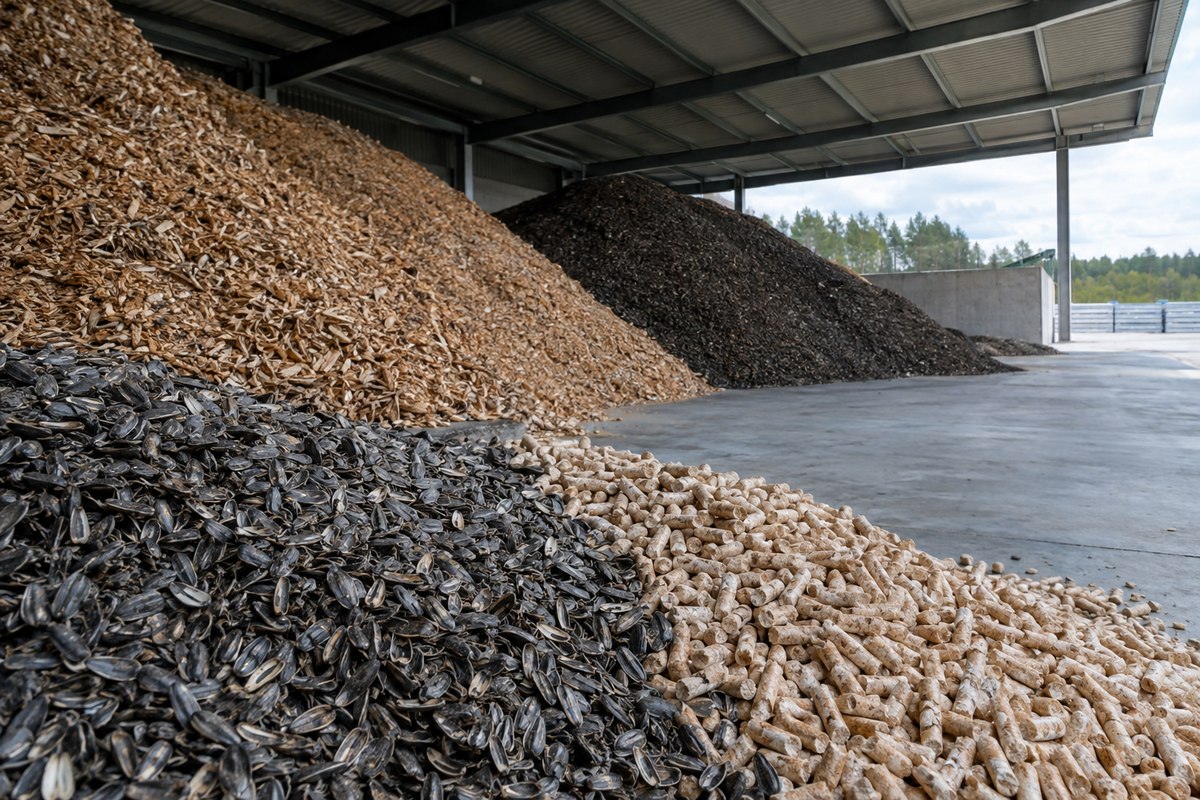
- Producers and traders of biomass fuels — wood and agro pellets, energy wood chips, sunflower husks, briquettes — sold to professional energy generation and buyers requiring RED II proof;
- Storage and intermediation entities — when they acquire ownership of the fuel and pass sustainability information further down the chain;
- Energy producers from biomass — CHP plants, boiler houses and biogas plants settling public support or demonstrating compliance with the criteria before authorities.
It is worth stressing that the business obligation applies to every link that wants to pass on the sustainable status — not only those directly covered by statutory duties. Breaking the chain through an uncertified intermediary causes the loss of batch status for all subsequent buyers, which is why large buyers increasingly verify the certificates of the entire supply chain before signing a contract.
Who usually does not have to get certified? A carrier providing only a transport service on behalf of a certified participant, without acquiring ownership of the fuel; an end user burning fuel for its own needs without sustainability claims; and entities trading fuel exclusively as uncertified — with the caveat that such a choice closes access to contracts and settlements requiring sustainable status. The decision point is always the question: does the organisation acquire ownership of sustainable fuel and want to pass that status on? If yes — it needs a certificate.
Certification scopes: production, trading, storage
A KZR INiG certificate is issued for specific scopes corresponding to the participant's role in the chain. The subject of certification is the entire biomass fuel production chain — from the feedstock extraction stage to final use — taking into account all links in the supply chain. In practice, we distinguish three main groups of scopes:
| Scope group | What it covers | Typical participants |
|---|---|---|
| Production | Manufacture of feedstocks, biofuels, bioliquids and biomass fuels; first gathering points and feedstock collection | Pellet and wood-chip producers, biocomponent refineries, biogas plants |
| Trading | Trading in sustainable fuels with the transfer of sustainability documentation — with or without storage | Trading houses, importers, exporters, brokers |
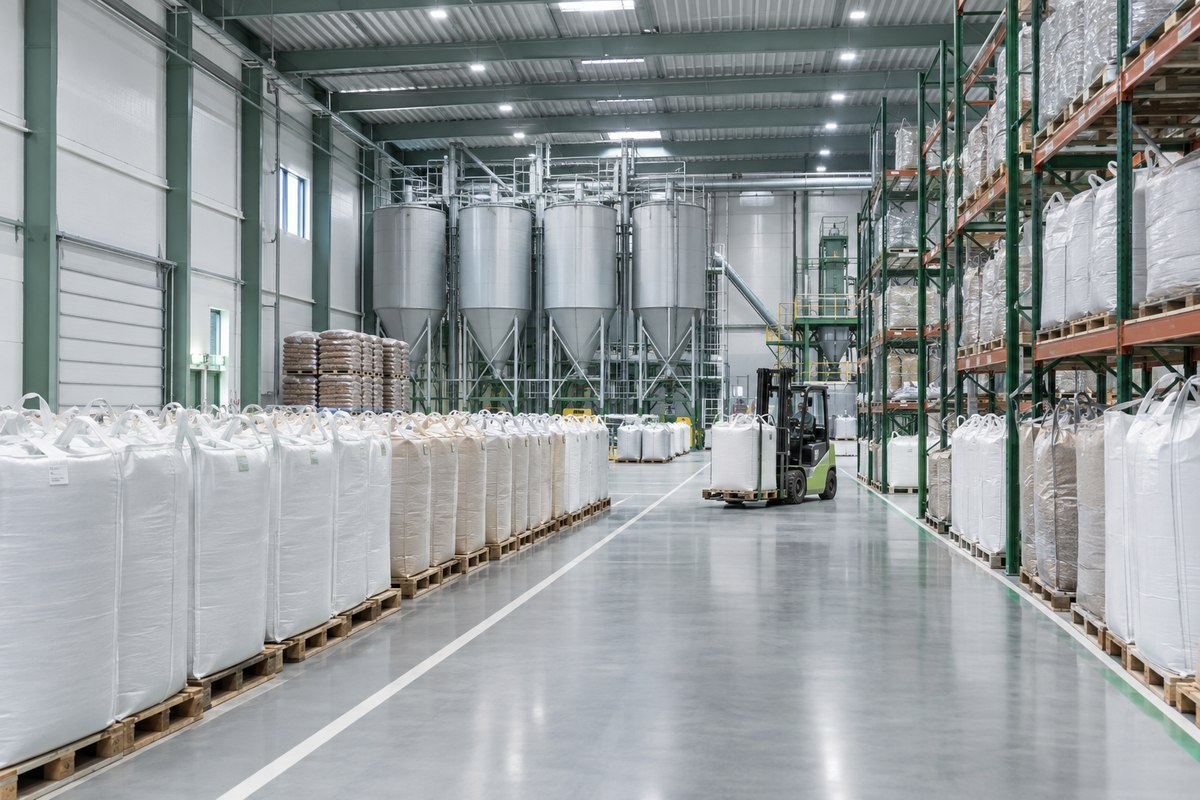
| Storage | Storage of biomass fuels while maintaining batch traceability | Terminals, ports, bonded warehouses and logistics warehouses |
One participant can hold several scopes at once — the typical configuration for a pellet producer is production plus a feedstock collection point, and for a distributor: trading plus storage. Each scope is audited separately, but the scheme documentation is designed as a whole, so that mass-balance and supplier-management procedures serve all scopes without duplicating records. When registering several scopes, the audit plan covers each of them proportionally to risk — the auditor will see warehouses and production on site, and will verify the trading part mainly documentarily. The decision on scopes is worth making before registering in the scheme, because their later expansion requires a separate extension audit and an additional fee.
Sustainability criteria and carbon footprint (RED II)
KZR INiG implements the sustainability criteria of Article 29 of the RED II directive. A scheme participant must demonstrate compliance with two groups of requirements:
Land criteria and feedstock origin
Agricultural feedstocks must not come from land with a high carbon stock (peatlands, wetlands), areas of high biodiversity, or land converted after January 2008 in a manner inconsistent with the directive. For forest biomass, forest management criteria are verified: legality of harvesting, the forest's regenerative capacity, protection of soils, waters and biodiversity, and a ban on degrading natural forests. Waste and residues are exempt from the land criteria but must demonstrate that they were not produced deliberately. In the participant's documentation these criteria translate into supplier declarations, contractual provisions and procedures for verifying new feedstock sources.
GHG emission reduction criteria — carbon footprint
Biomass fuels must demonstrate a greenhouse gas emission saving against the fossil fuel comparator. For energy installations, the thresholds are at least 70% for units commissioned from 1 January 2021 and at least 80% for units commissioned from 1 January 2026. Emissions are calculated across the entire fuel life cycle — from cultivation or extraction, through processing and transport, to combustion — with the option of using default values from the directive or actual values documented by the participant. In practice, we build an emission calculator for the client, assigned to specific batches, so that the data on transport documents is repeatable and auditable.
With actual values, the key elements are raw operational data: energy and fuel consumption in production, feedstock moisture affecting drying costs, transport distances and means. Agreeing the calculation methodology with the certification body before the first audit prevents later interpretational disputes and speeds up the issuing of the certificate.
Traceability, mass balance and transport documents
The basis for demonstrating sustainability in KZR INiG is the traceability of biomass and fuel quantities along the entire chain — in accordance with the guidelines of the System KZR INiG /7 document. The scheme applies the mass-balance model: batches with different characteristics may be physically mixed, but sustainability information is kept on a book-entry basis. The rules the auditor checks first:
- Sustainable balance — the quantity of output fuel with sustainable status never exceeds the input quantity, taking into account technological losses and conversion factors;
- Accounting periods — the balance is closed in periods no longer than 12 months, without negative balances;
- Batch traceability — every batch linked to an input document: contract, invoice, goods-received note and the supplier's sustainability data;
- Transport documents — when transporting sustainable fuel, batch sustainability data is transferred (feedstock type, the supplier's certification scheme, GHG emission data), consistent with the invoice and the parties' mass balances;
- Archiving — documentation is kept for the period required by the scheme, in a form allowing source verification at the audit.
The most common nonconformities in this area are: discrepancies between the mass-balance register and warehouse stocks, missing sustainability data on transport documents, and "transferring" sustainable status between batches of different origin without a valid basis. All these defects are effectively detected by an internal audit — which is why we recommend it as a mandatory element of preparation before the certification body's auditor enters the plant.
The certification process and audit
The path to a KZR INiG certificate is formally described in the scheme documents and consists of the following stages:
- Meeting the scheme requirements — familiarisation with the scheme documents, implementation of traceability, mass-balance and supplier-management procedures; in our practice this stage starts with a gap analysis and ends with an internal audit;
- Registration application — submitting the application to the scheme administrator (INiG-PIB) together with the required annexes; in practice, administrative activities are directed by the scheme's service office, and in some industry materials this process is marked with the abbreviation INSTAL — regardless of the naming, the decisive elements are the scheme documents and the register maintained by the operator;
- Agreement with a certification body — choosing an authorised body, agreeing the scopes, locations and audit date;
- Certification audit — usually 1–2 days at the plant: interviews with the scheme representative and employees, a review of the mass balance, transport documents and supplier contracts, an inspection of the warehouse or production line;
- Decision and certificate issuance — after a positive assessment and closure of any nonconformities, the certificate (valid 12 months) is published in the KZR INiG register;
- Surveillance and recertification — the certification body maintains surveillance during the validity period, and a recertification audit is carried out every year.
The auditor assesses both documentation and operational practice. A typical check covers: a sample of transactions from feedstock intake to sale, consistency of quantities in the mass balance with the accounts and warehouse, the currency of the approved supplier list, completeness of sustainability data on transport documents, and the competence of persons despatching and receiving batches. A good readiness test is attempting to fully reconstruct the history of one random batch — if it passes without gaps, the organisation is prepared.
Nonconformities found at the audit are divided into minor and critical. Minor ones are closed with a corrective action plan before the next inspection; critical ones — e.g. an exceeded mass-balance total or missing sustainability data on documents — block the issuing of the certificate until an effective correction is demonstrated. In extreme cases the body may suspend or withdraw the certificate, and information about the status change goes to the public register, which counterparties see immediately. This is an additional argument for treating the mass balance as an ongoing process run daily, not a document assembled once a year for the audit.
Working with certification bodies
Surveillance of compliance with the scheme is carried out exclusively by independent certification bodies authorised by the KZR INiG administrator. The requirements for them — auditor competences, impartiality rules, appeal procedures — are defined in the System KZR INiG /9 document. Several recognised bodies of national and international reach operate in the market, offering KZR INiG certification also in English for export companies.
Practical tips for working with a certification body:
- Choose a body with experience in your scope — auditing a pellet producer requires different competences than auditing a biogas plant;
- Book the audit date in advance — at the peak of the season (autumn, the start of the heating campaign) auditors' calendars fill up quickly;
- Prepare documentation in a form ready for quick review: a document index, an up-to-date mass balance and printouts of key registers can shorten the audit by as much as half;
- Treat minor nonconformities as an improvement list — bodies willingly accept corrective plans presented quickly and concretely.
As consultants, we do not issue certificates and do not replace the certification body — our role is to prepare the organisation so that the audit runs smoothly and the certification decision encounters no formal obstacles.
KZR INiG vs SURE and ISCC — mutual recognition of certificates
KZR INiG does not function in isolation. As a scheme recognised by the European Commission as compliant with RED II, it is respected throughout the Union, and the principle of mutual recognition also covers documentation from other recognised voluntary schemes. In practice this means:
- A KZR INiG participant may buy feedstocks and fuels with certificates from other recognised schemes — e.g. wood chips with SURE documentation or biocomponents with ISCC EU documentation — and pass the sustainable status on, in accordance with mass-balance rules;
- Foreign counterparties holding SURE or ISCC EU certificates accept KZR INiG documentation — biomass fuel with a Polish certificate can reach power plants in Germany, Austria or Scandinavia;
- The condition of mutual recognition is the completeness of data transferred at the transaction: the party's certificate number, feedstock type, sustainability status and — where required — GHG emission values.
It is also worth remembering that maintaining two schemes in parallel does not mean double administrative work: mass-balance registers, approved supplier lists and traceability procedures are designed to serve both schemes simultaneously. The differences come down mainly to the transfer-document templates and separate annual reports for each operator.
When to choose KZR INiG and when SURE? A practical rule: if the main market is Polish participants of the biofuel market and national settlements, KZR INiG is the natural choice and usually the most economical. If exports of solid biomass fuels to Western energy generation dominate, counterparties may prefer SURE. Many organisations maintain both certificates in parallel, using shared documentation infrastructure — the mass balance, supplier lists and emission calculators — which limits the cost of maintaining the second scheme.
Certification costs and timeline — indicative figures
The KZR INiG certification budget consists of registration and scheme fees, the certification body's remuneration and the cost of preparing the organisation. The values below are indicative — they depend on scopes, the number of locations and documentation maturity:
| Element | Indicative cost / time | Notes |
|---|---|---|
| Scheme registration and administrator fees | from several thousand PLN per year | according to the operator's price list; depends on scopes |
| Audit and certification by the body | approx. PLN 6–15 thousand per cycle | 1–2 audit days; grows with the number of scopes and locations |
| Preparation: documentation, mass balance, training | 2–4 months | gap analysis, procedure implementation, GHG emission calculator |
| Internal audit before certification | 1–2 days | recommended 3–6 weeks before the body's audit |
The realistic time from decision to certificate is usually 2–4 months. What takes longest is not the audit itself but gathering data: feedstock supplier declarations, agreeing contractual clauses and building the mass balance for the reference period. After certification, plan maintenance costs — ongoing mass-balance bookkeeping, supplier list updates and preparation for annual recertification amount to 2–4 working days per month for the scheme representative in an average plant. A final reminder: the decision to issue the certificate rests exclusively with the certification body; no consultant can guarantee the audit outcome — but they can ensure that the organisation enters the audit without formal gaps.