SURE (Sustainable Resources Verification Scheme) is a European certification scheme for the sustainable use of biomass and biogas, compliant with the RED II directive and operated by REDcert; it confirms compliance with the sustainability criteria and the required reduction of greenhouse gas emissions for biomass fuels delivered to the energy sector. A SURE certificate is the evidence that industrial buyers need for directive reporting, and that supply-chain participants need to lawfully pass on the "sustainable" status to subsequent entities.
Key takeaways
- SURE covers solid and gaseous biomass fuels and feedstocks for their production — it does not cover liquid transport biofuels.
- The scheme is recognised by the European Commission as a voluntary scheme compliant with RED II — the certificate works across the entire EU.
- The whole chain is subject to certification: biomass producers, first gathering points, collectors, traders, processors and power plants.
- The basis for passing on sustainability status is the PoS document (Proof of Sustainability) and a traceable mass balance.
- The required GHG emission saving is at least 70% or 80%, depending on the date the installation was commissioned.
On this page
- Why SURE certification — RED II, public support, KOBiZE
- SURE certification scopes — who enters the scheme
- Sustainability criteria for forest and agricultural biomass
- Mass balance and traceability of material flow
- Calculating GHG emissions along the chain — the 70% and 80% thresholds
- Documents: Proof of Sustainability and chain transfer
- The SURE audit — what it looks like and what the auditor checks
- SURE vs REDcert, KZR INiG and ISCC — differences
- Certification costs and timeline — indicative figures
- Frequently asked questions about SURE
Why SURE certification — RED II reporting, public support and KOBiZE
The RED II directive (Directive (EU) 2018/2001) obliges Member States to apply sustainability criteria and greenhouse gas emission reduction criteria to biomass fuels used for energy production. In practice, these requirements apply to solid biomass fuels burned in installations with a total rated thermal input of at least 20 MW and to gaseous fuels in installations from 2 MW. If the fuel does not demonstrate compliance with the criteria, the energy produced from it cannot count towards national renewable energy targets or be covered by public financial support.
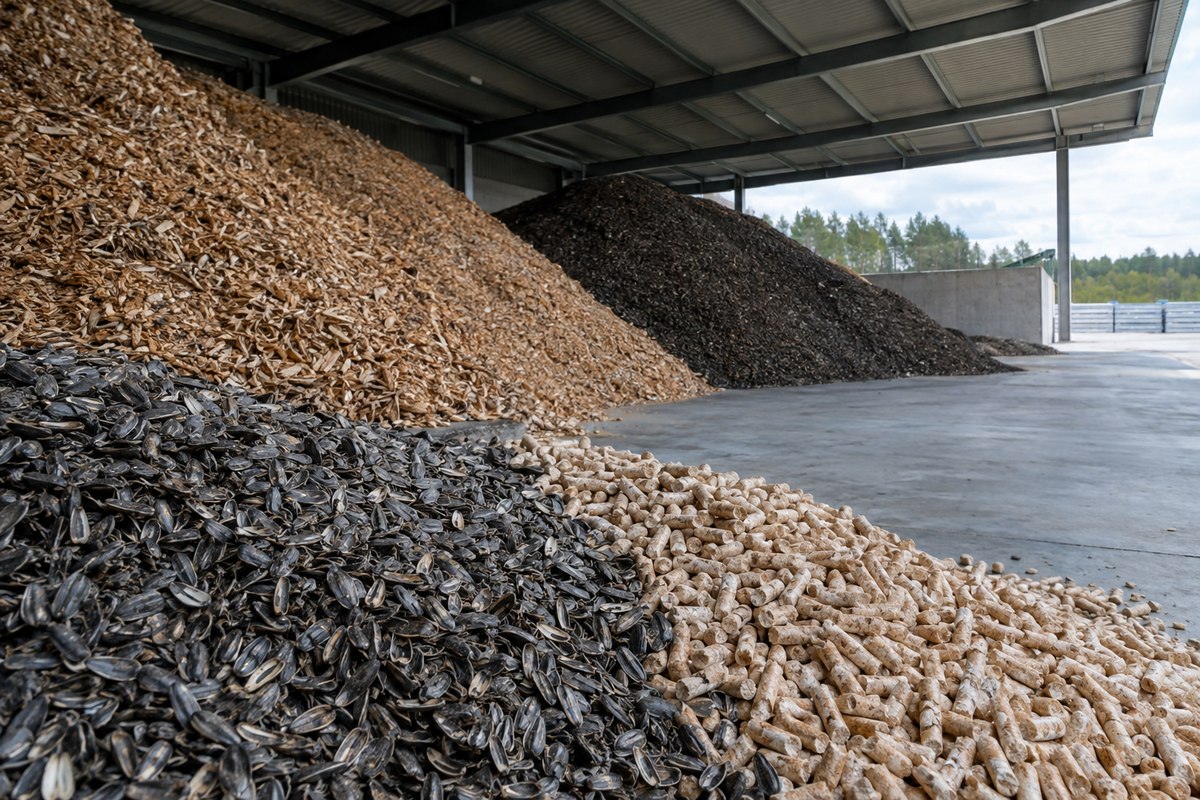
This is exactly where SURE comes in. The scheme was created as a practical tool for the solid biomass fuel industry — pellets, wood chips, sunflower husks, forest and agro biomass — and has gained European Commission recognition as a voluntary scheme compliant with RED II. Holding a SURE certificate means that every link in the chain, from the collection point to the power plant, has confirmed the conformity of the feedstock and process with the sustainability criteria, and the documentation makes it possible to reconstruct the route of every fuel batch.
For Polish market participants, a SURE certificate has three concrete applications:
- RED II reporting — CHP plants and boiler houses demonstrate fuel sustainability in directive reports and towards national authorities; without proof of sustainability, biomass is treated as uncertified fuel;
- Public support — participation in RES auctions, FiT/FiP schemes and contracts for difference requires proof that the fuel meets the sustainability criteria and emission-saving thresholds;
- KOBiZE reporting and national registers — the national transposition of RED II introduces the Register of Sustainability Certificates maintained in the KOBiZE system; certificates of voluntary schemes, including SURE, form the basis of entries and settlements.
The certification requirement increasingly appears in commercial contracts independently of regulations: large Scandinavian and German buyers purchasing pellets and wood chips from Poland explicitly demand SURE or equivalent status. Certification has therefore become a market condition of access to contracts, not merely a regulatory formality.
The strategic dimension is also worth remembering. The solid biomass fuel sector is undergoing consolidation — buyers are reducing their supplier lists to those able to document the full sustainability chain. An organisation with a SURE certificate not only meets the formal requirement but also builds a lasting negotiating advantage: it can offer fuel with an assigned, verified GHG emission value, which in tenders and long-term contracts translates directly into bid scoring. The national transposition of RED II additionally organises the market by introducing an obligation to verify biomass fuels and register entries — entities prepared earlier avoid sales downtime in the period when authorities and buyers start demanding sustainability evidence with every delivery.
SURE certification scopes — who enters the scheme
SURE certifies individual links in the supply chain, and each participant receives a certificate with a defined scope. The scopes correspond to the organisation's role in the chain and differ in audit requirements — a feedstock collection point is audited differently from a trader operating purely on paper. The table below summarises the most important scopes; the exact code numbering is defined in the current SURE scheme documentation.
| Chain link | Certification scope | Typical entities |
|---|---|---|
| Biomass producers | Producer of agricultural / forest biomass, including producer group manager | Farms, forest districts, producer groups |
| First gathering point | First gathering point — the first entity physically taking over the feedstock | Wood-processing plants, wood-chip and husk collection points, biomass yards |
| Collectors | Collector — collection and intermediation in feedstock trading | Companies collecting wood waste and agro residues |
| Traders and suppliers | Trader / supplier — with or without storage | Trading houses, pellet importers and exporters |
| Processors | Processing unit — production of biomass fuels | Producers of pellets, briquettes, energy wood chips |
| Biogas plants | Producer of biogas / biomethane from biomass | Agricultural and industrial biogas plants |
| Energy sector | Conversion — production of electricity and heat | CHP plants, industrial boiler houses, power plants |
Key principle: only certified links may pass on the sustainable status. If an entity without a certificate appears in the chain — e.g. an uncertified collector buying wood chips from sawmills — the sustainability information "breaks" and further links cannot sell the batch as sustainable. That is why preparation for certification usually starts with mapping the supply chain and verifying which suppliers already hold a SURE, REDcert, KZR INiG or another certificate recognised by the European Commission.
One organisation can hold several scopes on a single certificate — a typical example is a pellet producer that simultaneously operates a first gathering point for feedstock and trading activity. Each scope means an additional audit module, but the documentation (mass balance, procedures, contracts) is designed coherently, which limits system maintenance costs.
Sustainability criteria for forest and agricultural biomass
SURE translates the sustainability criteria defined in Article 29 of RED II into operational practice. The criteria differ depending on the feedstock's origin, and proving their fulfilment rests with the scheme participant — most often the first gathering point or the producer, who collect data from feedstock suppliers.
Agricultural biomass
For agro feedstocks — straw, sunflower husks, bran, biomass from energy crops — what is verified above all is land origin. The feedstock must not come from land with a high carbon stock (wetlands, peatlands, forests converted after January 2008), from areas of high nature value, or from areas subject to a harvesting ban. In practice this requires declarations from farmers or producer group managers and verification against reference maps. For agricultural residues and waste (e.g. husks), some soil criteria do not apply — what remains crucial is demonstrating the GHG emission balance and batch traceability.
Forest biomass
For forest biomass, RED II introduces forest management criteria and land-use change criteria (LULUCF). What is audited includes: legality of wood harvesting, maintenance of the forest's regenerative capacity (reforestation after felling), protection of soils and waters, preservation of biodiversity and habitats, a ban on converting natural forests into plantations, and maintenance of carbon stocks in the ecosystem. Compliance can be demonstrated at the feedstock-source level — e.g. through national forest management systems or forest certificates recognised by the scheme — or at the individual level, through delivery documentation and supplier declarations. In Poland, both methods are most often combined: data from national forest registers plus supplier commitments written into contracts.
Waste and residues
Waste and residues — wood chips from furniture production, sawdust, shells — are exempt from the cultivation and land criteria but must demonstrate GHG emission reduction and traceability. The definition of "waste" and "residue" has audit significance: the entity must be able to demonstrate that the feedstock was not produced deliberately but arose as a by-product of another process.
In implementations we translate these criteria into simple operational instruments: an approved supplier list with feedstock risk classification, templates of land-origin declarations, a procedure for verifying new suppliers before the first delivery, and periodic cyclical reviews of supplier status. This way the requirements of Article 29 of RED II cease to be abstract legal text and become checkpoints in the daily work of the purchasing department — exactly as the auditor will want to see them on site.
Mass balance and traceability of material flow
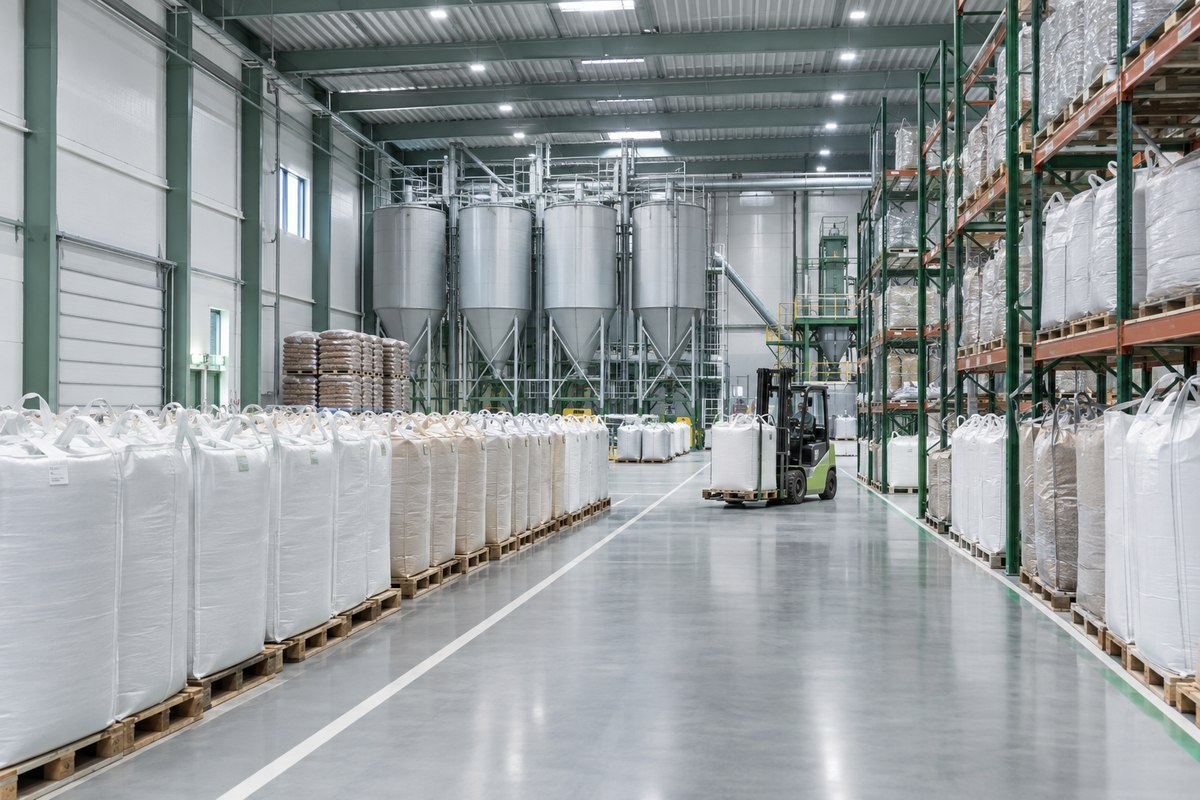
The second pillar of SURE, alongside land criteria, is supply-chain traceability. The scheme permits the mass-balance model, in which batches with different sustainability characteristics may be physically mixed, but sustainability information is kept on a book-entry basis, separately from the physical flow of material.
Practical consequences for a participant:
- Accounting periods — the mass balance is kept in defined periods, no longer than 12 months; the sustainable balance must not be negative at the end of a period;
- Quantity consistency — the quantity of product sold as sustainable must not exceed the quantity of sustainable feedstock received, taking into account conversion factors (process yield, e.g. the mass of pellets from a tonne of sawdust);
- Mixing characteristics — when mixing batches with different GHG emission values, values are assigned proportionally, in accordance with scheme rules;
- Batch traceability — every batch must be linked to an input document: contract, invoice, goods-received note, PoS data and — for feedstock — origin data;
- Records — a register of inputs, outputs and stocks broken down by sustainability status is kept; the auditor compares it with accounting and warehouse documents.
The most common mistakes we see when preparing the mass balance are: mixing sustainable and non-sustainable batches in one register without separating balances, missing conversions of technological losses (drying, screening), and assigning sustainable status to outputs larger than inputs. Each of these mistakes is a critical nonconformity at the audit — which is why we implement simple but rigid accounting procedures and periodic reconciliation of balances with the warehouse.
Calculating GHG emissions along the chain — the 70% and 80% thresholds
RED II requires that energy from biomass fuels demonstrate a greenhouse gas emission saving against the fossil fuel comparator. The level of the threshold depends on the date the energy installation was commissioned:
| Date the installation was commissioned | Minimum GHG emission saving |
|---|---|
| before 1 January 2021 | no mandatory threshold under Art. 29(10) (the requirement applies to newer installations) |
| from 1 January 2021 | at least 70% |
| from 1 January 2026 | at least 80% |
Emissions are calculated cascaded through the whole chain: cultivation or feedstock extraction (eec), processing (ep), transport and distribution (etd), end use (eu), with adjustments including carbon capture and storage. A participant may use default values published in the directive and scheme documents, or actual values calculated from its own data — the latter require a documented methodology and are a critical point of the audit. In practice, for wood pellets from sawdust and chips, reaching the 70% threshold is usually not difficult, but the 80% threshold for new installations forces attention to logistics: long transport, drying on fossil fuels or energy-intensive pressing can significantly worsen the result.
When preparing for certification, we help build an emission calculator for the specific chain: we collect data on fuel and energy consumption, transport distances and means of transport, and we document the results so that the auditor can verify them without guesswork.
Documents: Proof of Sustainability and chain transfer
The basic document passing on sustainability information is the PoS (Proof of Sustainability) — a proof of sustainability issued at every transaction between certified scheme participants. The PoS contains, among other things: the seller's and buyer's details with certificate numbers, the type and quantity of product, feedstock origin, information about the certification scheme, and the GHG emission data assigned to the batch.
The transfer rules are rigorous:
- a PoS is issued only by an entity with a valid certificate for the appropriate scope;
- sustainability information is passed on at every change of ownership of the batch — the producer's certificate "at the end" of the chain is not enough;
- the quantity data on the PoS must agree with the invoice, the goods-received note and the mass balance of both parties to the transaction;
- contracts with feedstock suppliers should contain clauses on feedstock origin and acceptance of the sustainability criteria;
- documentation is kept for at least 5 years, in a form allowing verification at the audit.
Besides the PoS, the participant maintains a package of system documents: traceability management procedures, mass-balance instructions, the approved supplier list, feedstock declaration templates, staff training records and — for scopes with storage — stock management procedures. We design this set of documents during implementation so that it covers the SURE requirements without duplicating existing quality documentation, e.g. from ENplus.
The SURE audit — what it looks like and what the auditor checks
The certification audit is conducted by an independent certification body approved by the scheme operator. The standard cycle looks as follows:
- Registration and contract — choosing the certification body, registering in the scheme, defining the certification scopes and locations covered by the audit;
- Initial audit — the auditor's visit at the plant, usually 1–2 days depending on the number of scopes and locations;
- Report and nonconformities — classification of findings, deadlines for corrective actions;
- Decision and certificate — once critical nonconformities are closed, a certificate valid for 12 months is issued;
- Surveillance audits and recertification — monthly possibility of documentary checks and a full recertification audit every year.
During the audit, the auditor verifies: the completeness and truthfulness of PoS documents, the consistency of the mass balance with warehouse and accounting records, feedstock supplier contracts and declarations, input data for GHG emission calculations, staff competence and — for physical scopes — batch labelling and storage. A typical audit session is a conversation with the scheme representative and the warehouse keeper, a review of documents for the full period since the previous audit, and an inspection of the plant.
The best-prepared organisations pass the audit in one day without critical nonconformities. The key is an internal audit carried out 3–6 weeks earlier: we check the mass balance on a sample of transactions, the completeness of PoS documents and the consistency of contracts — exactly as the certification body's auditor will do. Another good habit is attempting to reconstruct the full history of one randomly selected batch — from the feedstock input document, through production records, to the sales invoice and the issued PoS. If such a test passes without gaps, the whole system is ready; if not, there is still time for pilot corrections before the certification audit date.
SURE vs REDcert, KZR INiG and ISCC — differences
Several schemes recognised by the European Commission as compliant with RED II operate in the market. The choice depends on the product, the sales market and counterparties' requirements:
| Feature | SURE | REDcert-EU | KZR INiG | ISCC EU |
|---|---|---|---|---|
| Operator | SURE GmbH (operated by REDcert) | REDcert GmbH | Oil and Gas Institute — National Research Institute | ISCC System GmbH |
| Main area | Solid and gaseous biomass fuels for the energy sector | Liquid biofuels, bioliquids, feedstocks | Biofuels, bioliquids, biomass — Polish market and export | Broad: biofuels, biomass, circular economy |
| Typical participant | Pellet producers, collection points, CHP plants | Producers of biodiesel, HVO, ethanol | Polish participants of the biofuel and biomass fuel market | Large fuel and chemical corporations |
| Transfer document | PoS (Proof of Sustainability) | REDcert proof of sustainability | Certificate of compliance with KZR criteria | ISCC PoS |
Three questions determine the choice of scheme: what you sell (solid, gaseous or liquid fuel), to whom you sell (which scheme the end buyer accepts), and which certificates your feedstock suppliers hold. A frequent scenario we work with is combining scopes: a pellet producer maintains SURE for energy contracts and, in parallel, the ENplus quality certificate for retail sales — both schemes then share common traceability and batch-control documentation.
The most important practical information: certificates of schemes recognised by the European Commission are mutually respected along the supply chain. Buying wood chips with a KZR INiG certificate, you can sell pellets as sustainable under SURE, provided the data is transferred correctly and the mass balance is consistent. SURE and REDcert-EU are sister schemes — a common operator and harmonised procedures make it easier to combine scopes when a company works with both solid and liquid fuels.
Certification costs and timeline — indicative figures
The total cost consists of three parts: scheme fees, the certification body's remuneration, and the cost of preparing the organisation. The values below are indicative — they depend on the number of scopes, locations and the readiness of documentation:
| Element | Indicative cost / time | Notes |
|---|---|---|
| Registration and scheme fees | several thousand PLN per year | depends on scope and entity size; set with the scheme operator |
| Certification body audit | approx. PLN 6–15 thousand per cycle | 1–2 audit days; grows with the number of locations and scopes |
| Documentation preparation and implementation | 2–4 months | gap analysis, procedures, mass balance, GHG calculator, training |
| Internal audit before certification | 1–2 days | recommended 3–6 weeks before the certification audit |
When planning the budget, do not forget the post-certification maintenance costs: monthly mass-balance bookkeeping, updating the supplier list, renewing feedstock declarations and preparing for the recertification audit. In practice this is 2–4 working days per month for the scheme representative in a medium-sized plant — it is worth formally describing this role from the start and training a deputy.
A realistic schedule from decision to certificate is usually 3–5 months, with gathering supply-chain data and agreeing clauses with feedstock suppliers taking the most time. Organisations with a functioning quality management system (e.g. ENplus or ISO 9001) pass through implementation noticeably faster, because part of the procedures only needs to be extended with sustainability requirements. We emphasise: the certification decision rests exclusively with the certification body — the consultant's role is to prepare the organisation so that this decision encounters no formal obstacles.